Thyroid nodules are common, and discovering one on an ultrasound can naturally cause concern. Many people immediately worry about thyroid cancer, but most thyroid nodules are benign and do not require surgery.
The important question is: When does a thyroid nodule need FNAC, and when is observation enough?
The answer depends on several factors, including the nodule size, ultrasound appearance, suspicious features, medical history and symptoms. This guide explains how doctors use ultrasound and TI-RADS to decide between biopsy and monitoring. For background, see what a thyroid nodule is and when to worry.
What Is a Thyroid Nodule?
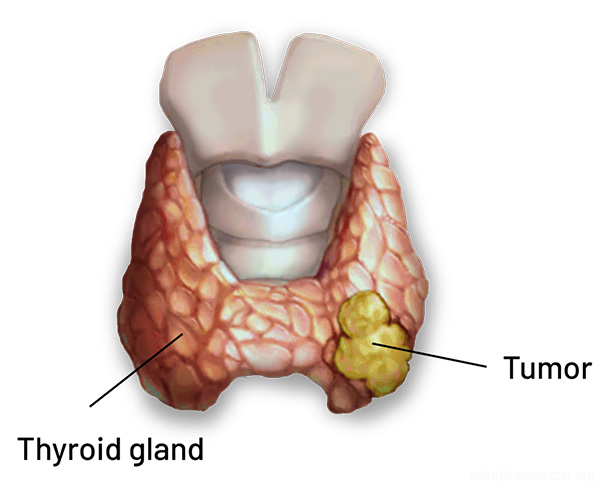
A thyroid nodule is an abnormal growth or lump within the thyroid gland, which is located at the front of the neck. Nodules may be discovered during a routine examination, an ultrasound, or an investigation for another medical condition. Some cause no symptoms, while larger nodules may produce neck swelling, difficulty swallowing, or pressure in the throat.
Solid
Made primarily of thyroid tissue.
Cystic
Containing fluid; purely cystic nodules carry a very low risk of malignancy.
Mixed
Containing both solid and fluid components.
Although most thyroid nodules are non-cancerous, certain nodules need further evaluation to assess the possibility of thyroid cancer. Blood tests alone cannot answer this — learn what TSH, T3 and T4 actually tell you and why imaging matters.
Does Every Thyroid Nodule Need FNAC?
No. Not every thyroid nodule requires FNAC or a biopsy. Doctors usually assess the nodule using a combination of findings rather than size alone.
- Thyroid ultrasound findings and TI-RADS category.
- Nodule size and growth over time.
- Clinical history, including neck radiation and family history.
- Physical examination and symptoms such as pressure or swallowing difficulty.
- Presence of suspicious cervical lymph nodes or other risk factors.
Thyroid ultrasound is particularly important because it helps identify features associated with a higher or lower risk of malignancy. Doctors may use a classification system such as TI-RADS to categorize nodules according to their ultrasound features and help determine whether FNAC is recommended.
What Is FNAC for a Thyroid Nodule?
FNAC stands for Fine Needle Aspiration Cytology. It is a minimally invasive procedure used to collect cells from a thyroid nodule for examination under a microscope.
During thyroid FNAC, a thin needle is inserted into the nodule, usually with ultrasound guidance, to collect a small sample of cells. The sample is then examined by a pathologist.
FNAC can help doctors determine whether a nodule is benign, suspicious, malignant, or inconclusive. However, some samples do not provide enough information for a definite diagnosis, and further evaluation may be necessary.
When Is FNAC Recommended for a Thyroid Nodule?
The decision to perform FNAC depends on the ultrasound risk category and the nodule size. The following are general examples based on commonly used American Thyroid Association guidance; the exact recommendation may vary according to the guideline and clinical situation.
1. Highly suspicious thyroid nodules
Nodules with highly suspicious ultrasound features may require FNAC when they measure approximately 1 cm or larger. Features that may raise concern include irregular margins, a taller-than-wide shape, punctate echogenic foci, and marked hypoechogenicity. The overall ultrasound pattern matters, rather than any single feature in isolation.
2. Intermediate-suspicion thyroid nodules
Nodules with an intermediate-suspicion ultrasound pattern may also require FNAC at around 1 cm or larger, depending on the guideline and clinical assessment. The decision should consider the complete ultrasound report, relevant risk factors, and the treating doctor assessment.
3. Low-suspicion thyroid nodules
For nodules with a low-suspicion ultrasound pattern, FNAC may be recommended when the nodule reaches approximately 1.5 cm or larger under commonly used ATA guidance. Smaller nodules without concerning features may be monitored instead, depending on the clinical context.
4. Very-low-suspicion thyroid nodules
For very-low-suspicion nodules, the benefit of immediate biopsy may be limited. Observation may be appropriate, while FNAC can be considered for nodules measuring around 2 cm or larger depending on the circumstances.
5. Purely cystic thyroid nodules
Purely cystic nodules generally do not require diagnostic FNAC because their risk of malignancy is very low. However, treatment may be considered if a cyst causes discomfort, pressure, or cosmetic concerns.
Important: These size thresholds are general guidance, not a substitute for an individual medical assessment. Other ultrasound classification systems, including ACR TI-RADS, use their own biopsy thresholds. Review your full report with a thyroid specialist in Thane or through our thyroid surgery and endocrine services.
When Is Observation Enough for a Thyroid Nodule?
Observation may be appropriate when a thyroid nodule has reassuring ultrasound features, does not meet the relevant biopsy threshold, and is not causing significant symptoms. Monitoring may also be recommended after a benign FNAC result, provided the ultrasound findings and clinical assessment are consistent with that result.
Observation generally involves:
- Periodic thyroid ultrasound, when indicated.
- Monitoring the nodule size and appearance.
- Reviewing any new symptoms.
- Reassessing the need for FNAC if the risk profile changes.
Observation does not mean ignoring the nodule. It means following a planned schedule and knowing what changes should prompt a review.
Keep your ultrasound reports together and bring them to each visit so your doctor can compare size and appearance over time.
How Often Should a Thyroid Nodule Be Monitored?
Follow-up depends on the ultrasound appearance and the initial evaluation. For nodules with benign cytology, repeat ultrasound may be considered at intervals such as 12–24 months for some low- or intermediate-suspicion patterns. Nodules with more suspicious features may need earlier reassessment, while very-low-suspicion nodules may require less frequent follow-up.
Your doctor will recommend an appropriate schedule based on the findings rather than relying on nodule size alone. There is no single follow-up schedule suitable for every patient.
What Does Thyroid Nodule Growth Mean?
An increase in size does not automatically mean that a thyroid nodule is cancerous. Benign nodules can also grow over time. However, significant growth may warrant reassessment, particularly if the nodule develops suspicious ultrasound features or begins causing symptoms.
A commonly used definition of significant growth is:
- An increase of at least 20% in two nodule dimensions, with a minimum increase of 2 mm in each dimension; or
- An increase of more than 50% in nodule volume.
Growth should be interpreted alongside the ultrasound appearance, previous FNAC results, and the patient symptoms. Large or growing nodules may sometimes cause difficulty swallowing, pressure in the neck, voice-related symptoms, or extension into the space behind the breastbone. These symptoms require medical evaluation.
Can a Benign Thyroid Nodule Still Require Surgery?
Yes. A benign FNAC result usually reduces concern about cancer, but it does not mean that treatment will never be needed. Thyroid surgery may be considered when a nodule:
- Causes difficulty swallowing, breathing, or other pressure symptoms.
- Is large or continues to grow significantly.
- Causes substantial cosmetic concerns.
- Has repeatedly inconclusive or indeterminate biopsy results requiring further evaluation.
- Has suspicious clinical or ultrasound findings that do not match the benign biopsy result.
The decision to operate depends on the patient symptoms, test results, risks, and preferences. Many benign nodules can be managed without surgery. Options are discussed on our thyroid treatment page, including endoscopic thyroidectomy where appropriate.
Most thyroid nodules are benign, but follow-up still matters. A benign result is reassuring, yet new symptoms, growth, or ultrasound changes should still be reviewed — similar to how any thyroid nodule deserves proper evaluation.
What Happens If Thyroid FNAC Results Are Inconclusive?
Sometimes FNAC does not provide enough cells for a definite diagnosis. Other samples may show indeterminate cellular changes that require additional assessment. An inconclusive result does not automatically mean cancer. It means that further assessment may be required to clarify the diagnosis and decide on the next step.
Depending on the result, the doctor may recommend:
- Repeat ultrasound-guided FNAC.
- Review of the ultrasound findings and clinical history.
- Additional diagnostic testing where appropriate.
- Molecular testing, if available and clinically suitable.
- Surgical evaluation in selected cases.
How Do Doctors Decide Between Thyroid FNAC and Observation?
The decision is based on the overall risk assessment, not just the nodule size. Ultrasound findings help determine the level of suspicion, while FNAC provides cellular information when a biopsy is indicated. Medical history, symptoms, lymph node findings, and previous test results also contribute to the decision. A small nodule with suspicious features may need a different approach from a larger nodule with a reassuring ultrasound pattern.
Share your history
Bring ultrasound reports, thyroid blood tests, prior FNAC results, and details of neck radiation or family history.
Clinical examination
Your doctor assesses the neck, nodule characteristics, lymph nodes, and any pressure or voice symptoms.
Imaging only if indicated
Ultrasound and TI-RADS scoring guide FNAC versus observation — biopsy is not automatic for every nodule.
When Should You See a Doctor?
Most nodules are benign, but persistent changes deserve attention. A qualified assessment is important because the right choice depends on the complete picture, not size alone.
Consider seeing a doctor if:
- You have a newly detected neck swelling or abnormal thyroid ultrasound.
- The nodule is growing, or you develop difficulty swallowing, breathing, or voice change.
- You have enlarged neck lymph nodes, prior neck radiation, or a family history of thyroid cancer — see a thyroid specialist in Thane.
These changes do not automatically mean cancer. You can book an appointment for a professional review with your reports.
Bottom Line: FNAC or Observation?
Thyroid nodules are common, and most are benign. However, some require FNAC to evaluate the possibility of thyroid cancer, while others can be safely monitored under an appropriate follow-up plan. The decision depends on ultrasound features, nodule size, clinical risk factors, symptoms, and previous biopsy results.
Final Thoughts
Regular follow-up is important when observation is recommended, and any significant changes should be reviewed by a qualified doctor. If you have a thyroid nodule, consult a specialist to understand whether FNAC, observation, or further evaluation is appropriate for your situation.