Finding a swelling or a lump in your thyroid can understandably be worrying. Many patients immediately think, “Is it cancer?”
The good news is that most thyroid nodules are not cancerous. However, every thyroid nodule deserves an appropriate evaluation because a small proportion can be malignant.
The aim of thyroid nodule evaluation is not to worry you—it is to identify which nodules are harmless and which ones need further investigation or treatment.
What Is a Thyroid Nodule?
The thyroid is a butterfly-shaped gland in the lower neck. It produces hormones that regulate metabolism, energy, temperature and other body functions.
A thyroid nodule is a localized lump or abnormal area within the thyroid gland. Nodules may be solid, fluid-filled (cystic), partly solid and cystic, single or multiple.
They are extremely common and increasingly detected because thyroid ultrasound scans are now widely performed.

Does Having a Thyroid Nodule Mean I Have Cancer?
No.
The majority of thyroid nodules are benign (non-cancerous). 5–15% of these nodules are found to be malignant.
Importantly, you cannot determine whether a thyroid nodule is cancerous simply by feeling it. Even a painless, small nodule can occasionally be malignant, while a large nodule may be completely benign.
This is why proper thyroid nodule diagnosis and evaluation is important. If you are looking for specialist care in Thane, see our thyroid surgery and endocrine services or consult a thyroid specialist in Thane.
What Causes Thyroid Nodules?
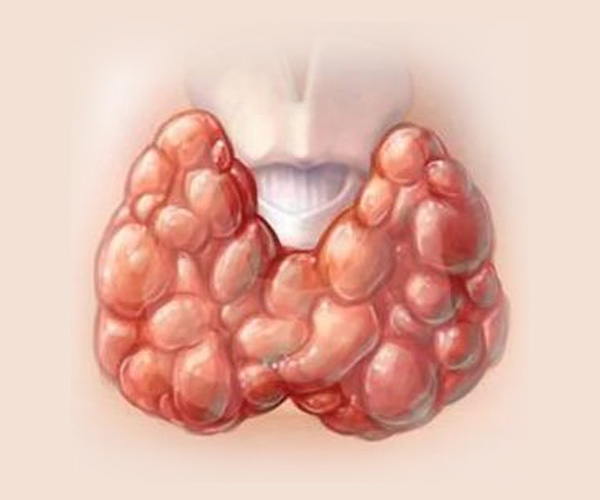
Iodine deficiency goiter
Benign thyroid growths linked to iodine deficiency.
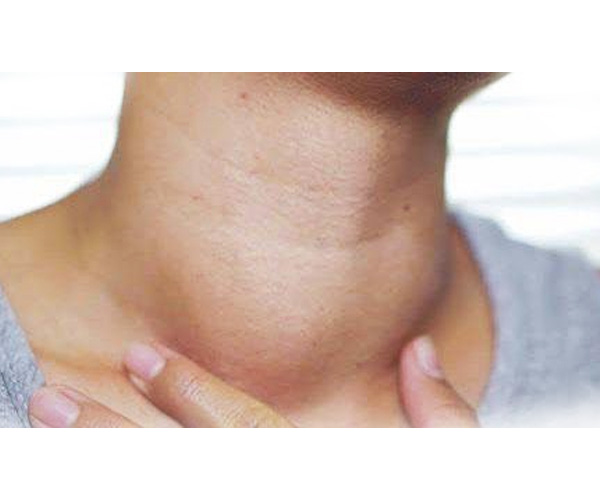
Thyroid cysts
Fluid-filled nodules within the thyroid gland.

Thyroiditis
Inflammation of the thyroid from autoimmune or other causes.
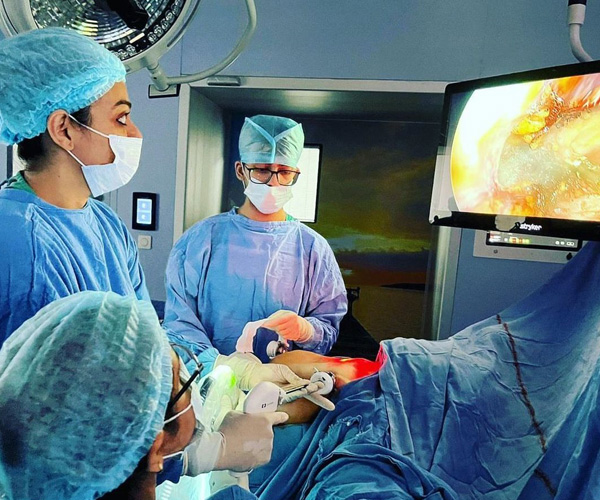
Thyroid cancer
A small proportion of nodules are malignant — which is why proper evaluation matters.
Sometimes, despite investigations, no specific cause is identified and the nodule may simply be benign.
What Symptoms Can a Thyroid Nodule Cause?
Many nodules cause no symptoms and are found incidentally on ultrasound. They still need expert evaluation regardless of size.
Larger nodules may cause:
- A visible or palpable swelling in the neck
- A sensation of pressure or fullness
- Difficulty swallowing
- Difficulty breathing
- A change in voice or persistent hoarseness
Some thyroid nodules can produce excess thyroid hormone, leading to symptoms such as palpitations, increased sweating, tremors, anxiety or unexplained weight loss.
Some nodules destroy the normal thyroid gland and its function and cause decreased thyroid hormone production, causing weight gain, lethargy, bradycardia, hypomenorrhoea or infertility.
Both these changes can cause serious heart problems and may land patients in ICU if not controlled in time.
How Is a Thyroid Nodule Evaluated?
Evaluation begins with clinical examination, blood tests, ultrasound, and FNAC when indicated.
Clinical Examination
Your surgeon assesses nodule size, location, movement with swallowing, neck lymph nodes, and any compression symptoms. History of radiation or family thyroid cancer is important.
Blood Tests
TSH with free T3/T4 is standard. A normal result does not rule out cancer — most thyroid cancers have normal function tests.
Thyroid Ultrasound
The most important imaging test. Features like size, composition, margins and calcifications feed into TI-RADS risk scoring.
FNAC Biopsy
A fine needle collects cells under ultrasound guidance. It is a simple OPD procedure — not a confirmation you have cancer, but a way to decide on treatment vs observation.
When Should You Be More Concerned About a Thyroid Nodule?
Certain features increase the need for careful evaluation of a thyroid nodule.
These include:
- A rapidly enlarging thyroid swelling
- A hard or irregular nodule
- Enlarged lymph nodes in the neck
- Persistent hoarseness or voice change
- Difficulty swallowing or breathing
- A history of radiation exposure to the neck
- A strong family history of thyroid cancer
- Suspicious features on ultrasound—usually the radiologist gives a TI-RADS 4/5 for strong suspicion of cancer, and TI-RADS 3 means it really needs to be seen by a surgeon.
Having one of these features does not automatically mean cancer. It simply means that the thyroid nodule deserves appropriate assessment.
Does Every Thyroid Nodule Need Surgery?
Absolutely not.
This is an important point.
A benign thyroid nodule that is small, asymptomatic and stable may simply require periodic thyroid ultrasound surveillance.
Thyroid nodule surgery may be considered when:
- The nodule is proven or strongly suspected to be cancerous
- It is causing pressure symptoms
- It is producing excess thyroid hormone in selected situations
- It is large or progressively increasing in size
- The biopsy is indeterminate and further diagnosis is required
- There are other clinical or ultrasound features that make surgery appropriate
The decision should be individualized rather than based on size alone. Learn more about surgical options on our thyroid treatment page, including endoscopic thyroidectomy where appropriate.
What If My Thyroid Nodule Biopsy Is “Indeterminate”?
Sometimes FNAC does not give a definite benign or malignant answer.
This can understandably cause anxiety, but an indeterminate thyroid biopsy does not mean that you have cancer.
Depending on the ultrasound findings, cytology category, clinical history and other factors, your surgeon may recommend repeat FNAC, additional testing, surveillance or surgery.
This is where consultation with an experienced thyroid/endocrine surgeon can be particularly helpful.
Can a Thyroid Nodule Disappear on Its Own?
Some cystic thyroid nodules can decrease in size, particularly if the fluid within them is absorbed or drained.
Some iodine deficiency goiters in initial stages may disappear if iodine is replaced in the diet.
Swellings due to thyroiditis may resolve on their own or may form a goiter that grows in size with time.
However, a thyroid nodule should not simply be ignored because it is painless or because it has been present for a long time.
The appropriate approach is to determine its risk and follow it when necessary.
A Thyroid Nodule Is Not Something to Panic About, but It Should Not Be Ignored
The discovery of a thyroid nodule can sound frightening, especially when you see the word “nodule” on an ultrasound report.
But remember:
- A thyroid nodule is a finding, not a diagnosis of cancer.
- Most thyroid nodules are benign. The important thing is to determine which nodules are low-risk and can be safely monitored and which require FNAC or treatment.
A thyroid nodule is a finding, not a diagnosis of cancer. Most nodules are benign — the goal is to identify which need FNAC or treatment and which can be monitored.
When Should You See a Thyroid Specialist?
Book a consultation if you have:
- A newly detected thyroid swelling
- An abnormal thyroid ultrasound
- A thyroid nodule that is increasing in size
- Difficulty swallowing or breathing
- Persistent voice change
- Enlarged neck lymph nodes
- A family history of thyroid cancer
- A history of radiation exposure to the neck
- An FNAC report that is suspicious or indeterminate
The Bottom Line
Don’t panic when you hear “thyroid nodule.”
But don’t ignore it either.
A systematic evaluation with clinical examination, thyroid function tests, thyroid ultrasound and FNAC when indicated can accurately determine the appropriate next step for most patients.
In thyroid disease, the goal is not to operate on every nodule. The goal is to identify the nodules that need treatment while safely avoiding unnecessary surgery in those that do not.
If you have recently been diagnosed with a thyroid nodule, bring your ultrasound report and thyroid blood tests when you consult a thyroid specialist. The decision about observation, biopsy or surgery should be based on the complete clinical and ultrasound picture—not on the size of the nodule alone.